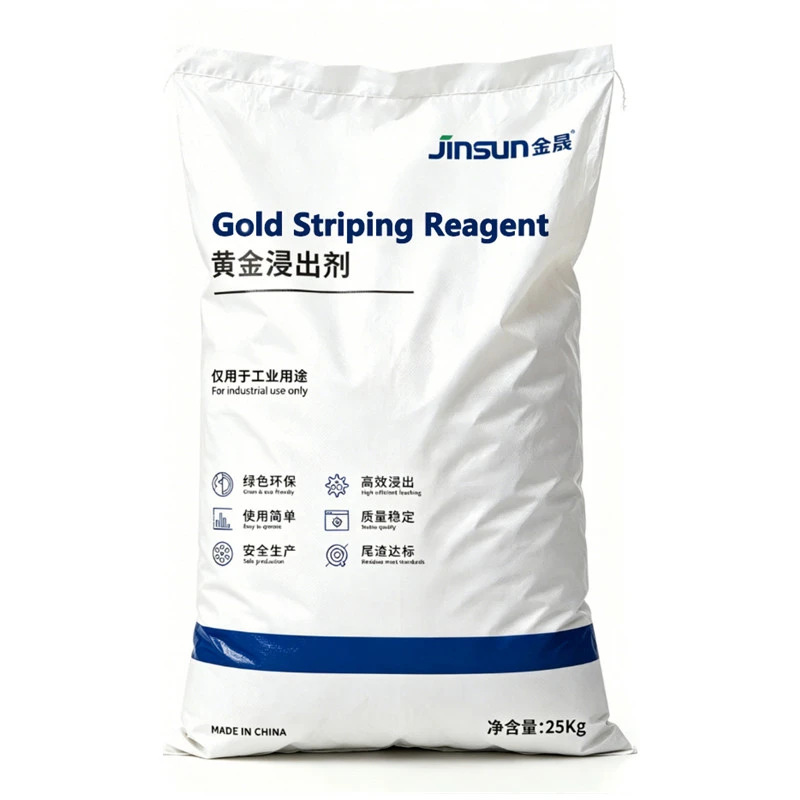

Alright folks, I'm an old - timer in the business of supplying Gold Leaching Auxiliary Agents. One question that I get asked all the time is how to test the effectiveness of these agents in the laboratory. Well, let me tell you, it's not rocket science, but it does require a bit of know - how and patience.
Understanding the Basics
First off, we need to understand what a Gold Leaching Auxiliary Agent is for. Simply put, these agents are used to enhance the process of extracting gold from ore. They work by improving the dissolution of gold in the leaching solution, making it easier to separate the precious metal from the surrounding materials.
Before we start testing, it's crucial to know the type of gold ore we're dealing with. Different ores have different compositions, and this can greatly affect how well the leaching agent works. For example, if the ore contains a high amount of sulfides, the leaching process might be more complex.
Preparing the Samples
The first step in the testing process is to prepare the ore samples. You want to get a representative sample of the ore. This means taking samples from different parts of the ore deposit to ensure that you're getting a good mix of all the minerals present.
Once you've got your sample, crush it down to a fine powder. This increases the surface area of the ore, allowing the leaching agent to come into contact with more of the gold particles. A ball mill is often used for this purpose. You'll want to grind the ore to a size where most of the particles are less than 75 microns in diameter.
Setting up the Leaching Experiment
Now, it's time to set up the leaching experiment. You'll need a few key pieces of equipment: a leaching tank, a stirrer, and a pH meter.
First, add the crushed ore sample to the leaching tank. Then, add the leaching solution. The leaching solution usually contains water, the Gold Leaching Auxiliary Agent, and sometimes other chemicals to adjust the pH. The pH of the solution is super important. Most gold leaching processes work best at a slightly alkaline pH, around 9 - 10. You can use the pH meter to monitor and adjust the pH as needed.
Next, start the stirrer. Stirring helps to keep the ore particles suspended in the solution and ensures that the leaching agent can react with the gold evenly. You'll want to stir the solution for a set period of time, usually anywhere from 24 to 48 hours.


Analyzing the Results
After the leaching period is over, it's time to analyze the results. There are a few different ways to do this. One common method is to measure the amount of gold that has been dissolved in the solution. You can use a technique called atomic absorption spectroscopy (AAS) to do this. AAS works by shining a light through the solution and measuring the amount of light that is absorbed by the gold atoms. The more light that is absorbed, the more gold is in the solution.
Another way to analyze the results is to look at the solid residue left in the tank. You can use a microscope to examine the residue and see if there is still any visible gold present. If there is, it means that the leaching agent didn't work as effectively as it could have.
Comparing Different Agents
As a Gold Leaching Auxiliary Agent supplier, I often recommend comparing different agents to see which one works best for a particular ore. You can run the same leaching experiment with different agents and compare the results.
For example, you might compare a Gold Lixiviant with a Gold Striping Reagent. By running side - by - side experiments, you can see which agent dissolves more gold in the same amount of time.
Factors Affecting Effectiveness
There are several factors that can affect the effectiveness of a Gold Leaching Auxiliary Agent. One of the most important factors is the temperature of the leaching solution. Generally, higher temperatures can speed up the leaching process, but there is a limit. If the temperature is too high, the agent might break down or become less effective.
The concentration of the agent in the solution is also crucial. If the concentration is too low, there won't be enough of the agent to react with all the gold particles. On the other hand, if the concentration is too high, it might be a waste of money and could also cause other problems.
The presence of other minerals in the ore can also affect the leaching process. Some minerals can react with the leaching agent and reduce its effectiveness. For example, if the ore contains a lot of copper, the copper might react with the agent and prevent it from reacting with the gold.
Quality Control
As a supplier, I always stress the importance of quality control. We need to make sure that our Gold Leaching Auxiliary Agents are consistent in their performance. This means running regular tests on our products to ensure that they meet the required standards.
In the laboratory, we can use the same testing methods that I've described above to check the quality of our agents. We also keep detailed records of all our tests, so we can track the performance of our products over time.
Cost - Benefit Analysis
When testing the effectiveness of a Gold Leaching Auxiliary Agent, it's also important to consider the cost - benefit analysis. A more expensive agent might be more effective, but it might not be worth the extra cost if the increase in gold recovery is only marginal.
You need to calculate the cost of the agent, the cost of the leaching process (including energy, labor, etc.), and the value of the additional gold that is recovered. By doing this, you can determine which agent is the most cost - effective for your operation.
Conclusion
Testing the effectiveness of Gold Leaching Auxiliary Agents in the laboratory is an important part of the gold mining process. It allows us to determine which agents work best for a particular ore and to optimize the leaching process.
If you're in the gold mining business and are looking for high - quality Gold Leaching Auxiliary Agents, feel free to get in touch with us. We're always happy to help you find the right solution for your needs. Whether you're interested in a Gold Ore Leaching Chemical, a High Efficiency Gold Leaching Agent, or a Non Cyanide Gold Leaching Reagent, we've got you covered.
References
- Smith, J. (2018). Gold Leaching Technology: Principles and Practices. Mining Journal Press.
- Johnson, R. (2020). Advances in Gold Extraction. Elsevier.