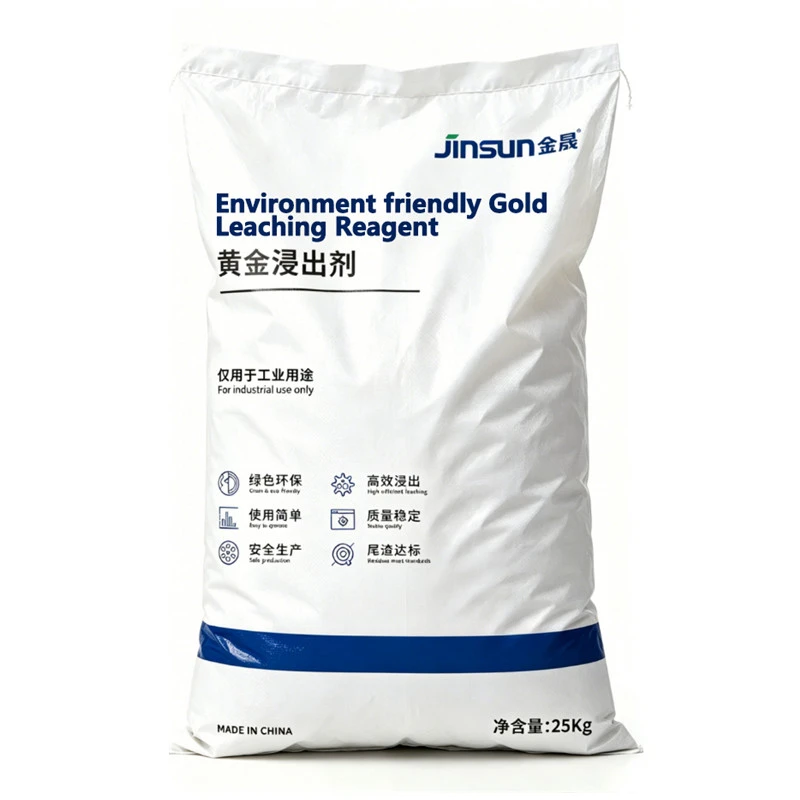
The core role of gold leaching agents in heap leaching processes is to chemically dissolve (e.g., cyanide) gold in the ore into a soluble complex, which is then recovered through adsorption or displacement. Traditional cyanide leaching is highly efficient (recovery rates often exceeding 80%) and economically significant for low-grade ores (0.5-1.5 g/t). However, its highly toxic nature can pollute water and soil, necessitating tailings neutralization and closed-pond management. Non-cyanide leaching agents (such as thiourea and thiosulfate) are environmentally friendly, but costly (thiourea is 10 times more expensive than sodium cyanide), require harsh reaction conditions (strongly acidic environment), and exhibit significant fluctuations in recovery rates (50%-85%).
Heap leaching processes are more adaptable, but require specific ore permeability, particle size (typically crushed to 10-50 mm), and climate (ideally better in arid regions). Recent research has focused on leaching agent enhancement technologies, such as adding leaching aids (peroxides) or bioleaching (utilizing microbial oxidation), to improve gold dissociation rates. Future development needs to balance efficiency, cost, and environmental protection, such as promoting cyanide degradation technologies (e.g., H₂O₂ treatment) or developing new composite leaching systems. At the policy level, restrictions on cyanide use in various countries (such as the EU REACH regulation) will drive the industry towards green processes.